A Northland Driver’s Guide to Animal Collisions: What Minnesota and Wisconsin drivers should know about deer crashes, auto insurance, staying safe. (and if you can keep the deer)
If you’ve driven in Minnesota or Wisconsin long enough, chances are you’ve had the moment. You’re driving home around dusk. Maybe you’re on Highway 33 outside Cloquet, Highway 53 north of Duluth, Highway 2 outside Superior, or one of the countless county roads connecting our Northland communities.
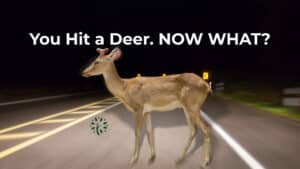
Then you see it. A deer standing near the shoulder. You slow down, watching the deer inently. And just when you’re convinced it’s going to stay put, it makes the perfectly logical decision to run directly in front of your vehicle.
Exactly how often they happen is surprisingly difficult to measure. Wisconsin recorded nearly 17,800 reported deer crashes in 2025. Minnesota’s official totals are much lower but Minnesota transportation researchers have found that deer collisions are significantly underreported, with one recent study estimating that only about 10% of collisions were reported on the roadways researchers examined. Estimates are as high as 40,000 total collisions with animals of any type.
Wisconsin DOT — Final Year-End Crash Statistics
MnDOT-Sponsored Study — Identifying Deer-Vehicle Collision Concentrations in Minnesota
So, what should you actually do when a deer appears in front of you? And if you hit one, does your car insurance cover the damage?

First Things First: Brake, Don’t Swerve!
Your first instinct may be to jerk the wheel to avoid the deer.
If a collision is unavoidable, however, Wisconsin DOT advises drivers to brake firmly and stay in their lane rather than making a sudden swerve. Swerving can cause you to lose control of the vehicle or create a more serious collision.
And remember one of the oldest Northland driving lessons around: if you see one deer, start looking for the others. WisDOT specifically warns that deer travel together, so drivers should watch for additional animals after seeing one cross the road. Deer are particularly active during early morning and evening hours.
Wisconsin DOT — Deer Crash Safety Guidance and Statistics
Does Car Insurance Cover Hitting a Deer?
Generally, yes – if you carry comprehensive coverage.
Damage caused by actually striking a deer or another animal is typically covered by the comprehensive portion of your auto policy, subject to your deductible and the terms of your specific policy.
Progressive — Does Insurance Cover Hitting a Deer?
But consider these two scenarios:
- You hit the deer.
A deer runs into the road, you brake but can’t stop in time, and you hit it. This is generally handled under comprehensive coverage. - You miss the deer but hit a tree.
You swerve, avoid the deer completely, but leave the roadway and hit a tree or guardrail. Now we’re generally looking at collision coverage, because your vehicle collided with another object rather than the animal.
What if you hit the deer AND still end up in the ditch? The sequence and circumstances of the crash matter. Rather than trying to determine which coverage applies yourself, tell your insurance agent or carrier exactly what happened and let the facts of the loss and your policy determine how the claim is handled.
Progressive — Comprehensive vs. Collision After a Deer Accident
What Should You Do After Hitting a Deer?
First, worry about the people involved – not your vehicle.
Check yourself and your passengers for injuries. If someone is injured, call 911. If you can safely move your vehicle out of active traffic, do so and turn on your hazard lights.
And don’t approach an injured deer. A frightened or injured wild animal can be unpredictable and dangerous.
Once everyone is safe:
- Take photos of your vehicle and the damage.
- Photograph the scene if you can safely do so.
- Note where the collision occurred and approximately what time it happened.
- Contact law enforcement when necessary.
- Contact your insurance company or agent.
- Make sure the vehicle is actually safe to drive before leaving.
WisDOT specifically advises motorists not to attempt to move an injured deer and recommends staying buckled inside the vehicle while waiting for assistance when possible.
Wisconsin DOT — What to Do After a Deer Crash
Don’t assume the vehicle is safe simply because the damage doesn’t look severe. Modern bumpers and grilles can contain sensors, cameras, wiring and cooling components. If you see leaking fluid, damaged lights, something rubbing against a tire, or warning messages on your dash, don’t take chances.
When in doubt, have it towed.

Do You Have to Report a Deer Collision?
The answer differs somewhat between Minnesota and Wisconsin.
In Minnesota
Minnesota’s current crash-reporting requirements include accidents involving a fatality, an injury receiving immediate medical treatment, disabling vehicle damage requiring a tow, or damage to roadside property or infrastructure.
That means a minor deer strike where nobody is injured, the vehicle remains driveable and nothing else was damaged isn’t necessarily treated the same as a serious crash.
If someone is hurt, your vehicle needs to be towed, the deer is creating a traffic hazard or you’re simply unsure what to do, contact law enforcement.
In Wisconsin
Wisconsin uses specific damage thresholds. A crash must be reported when it results in:
- an injury;
- $1,000 or more in damage to any person’s vehicle or property; or
- $200 or more in damage to state or other government-owned property other than a vehicle.
If law enforcement doesn’t file the required report, the driver may need to complete Wisconsin’s Driver Report of Crash.
Considering what today’s headlights, bumpers, grilles and sensors can cost, reaching $1,000 in vehicle damage doesn’t take much.
Minnesota Revisor of Statutes — §169.09 Traffic Collisions
Wisconsin DOT — Crash Reporting Requirements
Can You Keep the Deer?
Potentially, yes.
In Minnesota:
Minnesota gives the driver who collides with and kills a deer on a public road priority for a possession permit for the animal, assuming it wasn’t illegally taken.
There are additional considerations if the deer comes from one of Minnesota’s Chronic Wasting Disease (CWD) management zones, including specific carcass-disposal requirements.
In Wisconsin:
Wisconsin also gives the driver first priority to a deer killed in a vehicle collision. If the driver doesn’t want it, another person at the scene may claim it.
However, a vehicle-killed deer must be registered before it is removed from the scene. Wisconsin also has procedures for other vehicle-killed game animals, including turkey and bear.

What About Bears, Turkeys and Other Animals?
Physical damage caused by contact with an animal is generally handled under comprehensive coverage. So whether it’s a deer, bear or another animal, the important distinction is typically contact with the animal.
Domestic animals can make things more complicated.
If you collide with someone’s dog or livestock such as a cow or horse there may be additional questions involving the animal’s owner and how the animal ended up in the roadway. Don’t assume that because someone else owns the animal, their insurance automatically pays for your vehicle.
Document what happened and let the insurers sort out the applicable coverage and potential liability.
Progressive — Animal Collisions and Comprehensive Coverage
Will Hitting a Deer Make My Insurance Go Up?
An animal strike is generally handled as a comprehensive loss rather than a collision loss, but how any claim affects your insurance can depend on the carrier, state, policy, claims history and applicable rating rules.
That’s why we’d be cautious anytime someone promises that a deer claim “won’t affect your rates.”
If you’re concerned about filing a claim, talk with your agent about your coverage and deductible so you understand your options.
Progressive — Deer Accidents and Auto Insurance
The Bottom Line
For those of us driving around Duluth, Cloquet, Hermantown, Superior and communities throughout Northern Minnesota and Northwest Wisconsin, deer aren’t an unusual road hazard.
If one suddenly appears in front of you, brake firmly and maintain control of your vehicle rather than making a dangerous sudden swerve. If a collision happens, worry about yourself and your passengers first and the vehicle second.
And remember the basic insurance distinction:
Hit the animal? Damage to your vehicle is generally handled under comprehensive coverage, subject to your deductible and policy terms.
Miss the animal but hit something else? Damage to your vehicle is generally handled under collision coverage.
Most importantly, don’t wait until there’s a deer-shaped dent in your grille to find out whether you carry comprehensive coverage or what your deductible is.
If you’re not sure what your auto policy currently includes, our team at Reliable Insurance Agency can help you review your coverage and understand what’s there. We work with drivers throughout Minnesota and Wisconsin from offices in Cloquet, Hermantown and Superior and want what’s best for every Northland driver.