

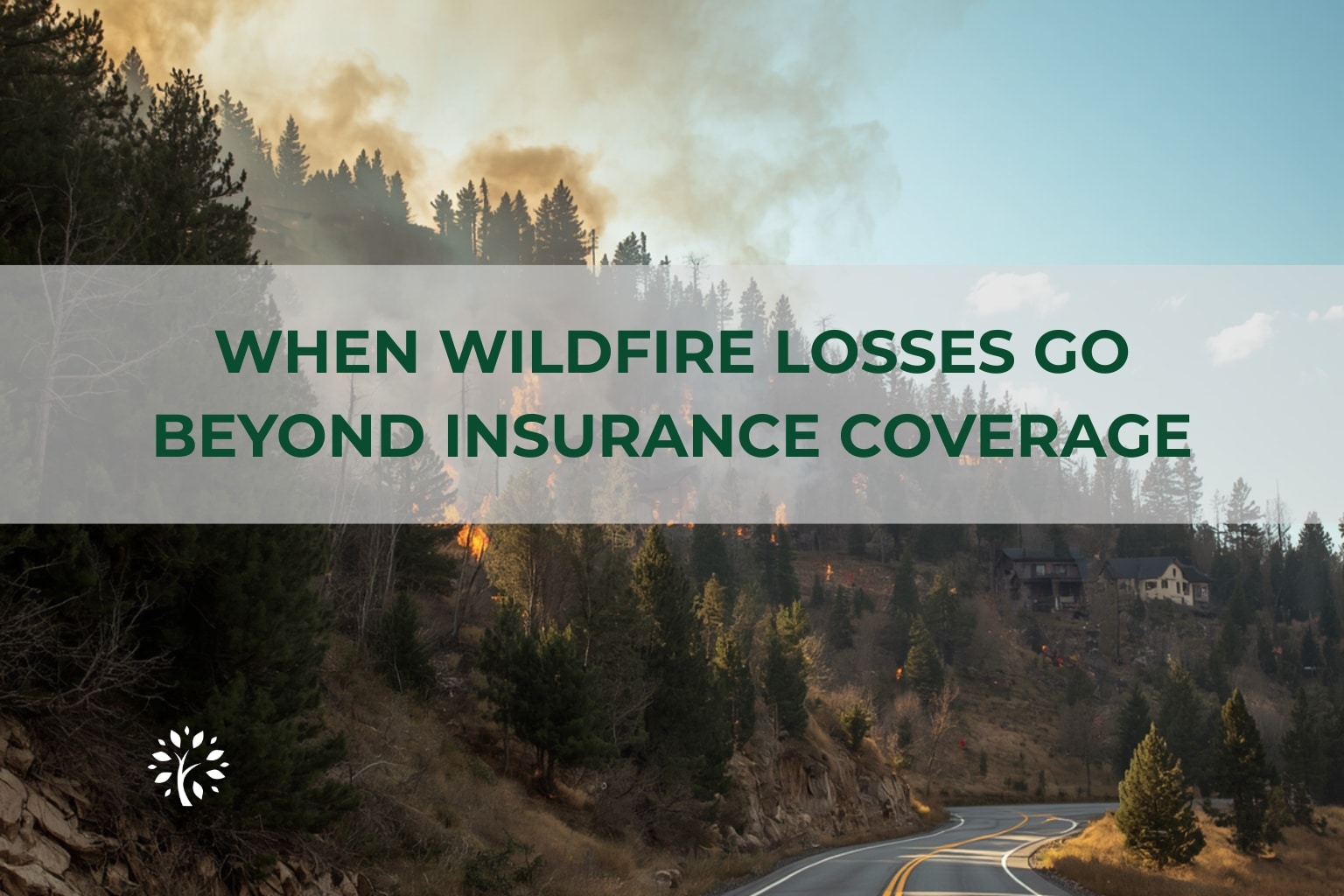
The devastation from events like the 2025 Jenkins Creek, Camp House, and Munger Shaw fires — and now the Flanders and Stewart Trail fires in 2026 — goes far beyond what most people expect. For many homeowners, these tragedies become difficult lessons in understanding when wildfire losses go beyond insurance coverage, even when they believed they had strong policies in place.
Gaps can emerge around debris removal, code upgrades, rebuilding requirements, and rising construction costs. As cleanup and rebuilding begin, out-of-pocket expenses can add up quickly. This blog isn’t about placing blame. It’s about understanding how these situations unfold, why recovery can become so complicated, and how homeowners can be better prepared for the unexpected.

A Community Still Picking Up the Pieces
Over the past year, many in our region have followed the stories coming out of Brimson, Cross Lake/Breezy Point and the surrounding areas after the Camp House and Flanders fires, among others.
Homes, cabins, outbuildings and even entire properties were lost in a matter of hours.
If you’ve seen any of the online/social media comments or spoken with anyone directly impacted, you’ve likely seen a mix of:
- Confusion
- Frustration
- Unexpected costs
- And, in many cases, a feeling of being completely on their own
All these emotions are quite fitting for the situation at hand. We, as neighbors, friends, and community members need to be empathetic and offer assistance in times of need. It’s part of what makes the Northland so special! And, hopefully, discussions surrounding this topic will get to others who are at risk of similar costly losses themselves.
Why the Financial Side Can Be So Complicated
One of the hardest parts of situations like this is that even after doing “everything right” a person can still run into challenges.
Not because they were careless.
Not because they didn’t have insurance.
But because of how rebuilding actually works after a total loss.
(Click each heading below to learn more about a few of these realities:)
1. Rebuilding Isn’t Starting Where You Left Off
When a home is destroyed, rebuilding doesn’t always mean replacing exactly what was there before.
In many cases, current building codes and environmental regulations apply even if your previous setup was allowed for decades.
That can include:
- Updated septic system requirements
- New electrical or structural standards
- Environmental compliance upgrades
These changes are often triggered simply by applying for ANY building permit.
2. Debris Removal Isn’t Unlimited
Clearing a property after a wildfire can be a massive undertaking:
- Burned structures
- Twisted metal
- Ash and hazardous materials
- Hundreds of damaged or destroyed trees
Most homeowners policies do include debris removal coverage, but it is often:
- Capped at a percentage of the dwelling limit, or
- Subject to a separate limit
On larger or heavily wooded properties, those limits can be reached quickly.
3. “Total Loss” Doesn’t Always Mean “Everything Is Covered”
This is one of the toughest realities to process.
A policy may fully cover the home itself, but other parts of the property can fall into different categories such as:
- Land (which is not insured)
- Landscaping or trees (often limited coverage)
- Detached structures (separate limits)
And when multiple structures are lost at once, those limits matter – and can be surpassed very quickly.
4. Coverage Amounts Can Fall Behind Reality
Construction costs have changed significantly over the past several years.
Even policies that felt sufficient at one point can become outdated due to:
- Material cost increases
- Labor shortages
- Code upgrades
Many homeowners only discover this gap during a claim—when it matters most.
The Hard Truth
There’s no easy way to say this, but . . .
Most people don’t fully understand the policy coverages/limits until they need it. This not a criticism. It’s simply human nature. When was the last time any of us have read all the fine print on a purchase agreement? Insurance policies aren’t something most people study in great detail. And, in day-to-day life, it’s easy to assume:
“If something major happens, I’m covered.”
Sometimes that’s true.
Other times it’s only partially true.
And once in a while, it isn’t true at all.
And, unfortunately, when a total loss event like a wild fire takes everything away, that’s when those differences become painfully evident.
What Homeowners Can Do
If there’s anything to take away from all of this, it’s not fear – it’s awareness. Here are a few simple steps that can make a meaningful difference.
(click to expand)
Review your coverage annually
Not just at renewal, but anytime you make changes to structures or land like building updates/improvements that would increase the cost to rebuild:
- Roof/window/door replacements
- Outbuildings and additional structures
- Recent improvements or changes
Understand key “gray areas”
Ask specifically about:
- Replacement cost vs. actual cash value
- Debris removal limits
- Ordinance or law (code upgrade) coverage
Think beyond just the house
Consider:
- Temporary living expenses during rebuild
- Detached garages, shops, and sheds
- Trees and land cleanup
Work with someone local who understands your needs
In situations like this, having someone in your corner can make a big difference.
- Explain what’s happening
- Advocate when needed
- Stay involved throughout the claim
This Is About People
At the end of the day, this isn’t just about policies, limits, or technical details.
It’s about neighbors who lost homes.
Families trying to rebuild.
Communities stepping up to support one another.
When something like this happens, people show up.
Helping clear land.
Offering temporary housing.
Donating time and resources.
That spirit matters just as much as anything written in a policy.
If You Have Questions
Whether you’re reviewing your own coverage or just trying to better understand how situations like this unfold, we’re always here to help. We have offices in Cloquet and Hermantown, MN and Superior, WI, and over 50 years of experience providing unique solutions to personal and business insurance needs.. With a promise to our clients to be fair and honest and to ALWAYS provide them the best options, we work tirelessly to prove to you that we’re true to our name.
Contact us today to begin your own Reliable Journey.
When wildfire losses go beyond insurance coverage.
Providing Professional Insurance Services With a Hometown Feel Since 1974

Cloquet • Hermantown • Superior